
Dr. Soumya Paik Pediatric Orthopedic Surgeon In Kolkata Qualifications, Expertise, Treatments & Clinic Information
- 15th September, 2026
- 0 Comments
- 19
- Healthcare

When a child has a fracture, abnormal walking pattern, clubfoot, bow legs, hip problem or another bone and joint condition, parents often begin by searching for a good orthopedic doctor. However, orthopedic problems in children are different from those seen in adults.
A child's bones are still growing. Growth plates remain active, bone alignment changes with age, and congenital deformities may respond differently depending on how early they are identified. This is why some children benefit from evaluation by a doctor who specifically focuses on pediatric orthopedics.
Dr. Soumya Paik is a Kolkata-based pediatric orthopedic surgeon whose practice focuses on musculoskeletal problems affecting newborns, children and adolescents. Apollo Hospitals currently lists him as a pediatric orthopedic specialist with 15+ years of experience, while his professional profile documents dedicated pediatric orthopedic training in Kolkata, Mumbai and Singapore.
This Mediguide India guide explains his educational background, specialist training, clinical interests, common conditions treated and where parents can currently find him in Kolkata.
For assistance with finding doctors, hospitals or treatment information in Kolkata, contact Mediguide India: +91 8001700199.
Who Is Dr. Soumya Paik?
Dr. Soumya Paik is a Paediatric Orthopaedic Surgeon in Kolkata whose clinical work is centred on bone, joint, muscle and developmental orthopedic problems in growing children.
His own professional profile states that he chose to focus specifically on pediatric orthopedics after his postgraduate orthopedic training, recognising the need for more dedicated management of childhood orthopedic disorders in Eastern India.
His practice covers problems ranging from common childhood fractures to congenital deformities and more complex conditions affecting a child's hips, limbs, gait and neurological function.
Dr. Soumya Paik's Qualifications
Dr. Paik's professional profile lists the following educational qualifications and specialist credentials:
MBBS – Medical College, Kolkata
He completed his Bachelor of Medicine and Bachelor of Surgery from Medical College Kolkata.
MS in Orthopaedics – IPGME&R / SSKM Hospital, Kolkata
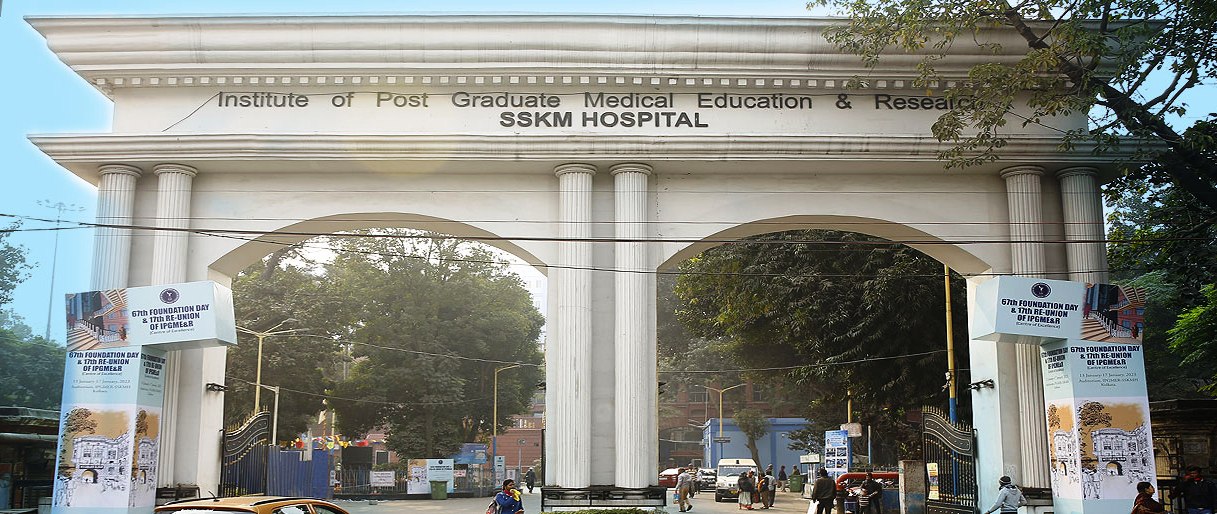
He subsequently completed his postgraduate orthopedic training at the Institute of Post Graduate Medical Education & Research, commonly known as SSKM Hospital or PG Hospital in Kolkata.
DNB in Orthopaedics
Dr. Paik also obtained the Diplomate of National Board qualification in Orthopaedics.
MNAMS
His clinic profile states that he became a Member of the National Academy of Medical Sciences in 2014.
Apollo currently summarises his education as MBBS, MS and DNB and lists him in its Paediatric Orthopedic specialty.
Specialized Training in Pediatric Orthopedics
An important part of Dr. Soumya Paik's professional background is his dedicated training specifically in children's orthopedics.
After completing his postgraduate orthopedic education, his profile states that he undertook pediatric orthopedic training at B. J. Wadia Hospital for Children in Mumbai.
He later worked with the Institute of Child Health in Kolkata, gaining further exposure to pediatric orthopedic problems in the local population.
Dr. Paik subsequently completed a clinical fellowship in Paediatric Orthopaedics at National University Hospital, Singapore. His current Neotia Bhagirathi profile also lists his Fellowship in Pediatric Orthopaedics from NUH, Singapore.
This combination of general orthopedic training and dedicated pediatric orthopedic fellowship experience is particularly relevant because children often require very different treatment decisions from adults.
Awards and Academic Achievements
According to his professional biography, Dr. Paik has received several academic distinctions during his orthopedic career.
These include the P. T. Rao Gold Medal Award in 2011 from the Indian Orthopaedic Association and the Siliguri Best Paper Gold Medal Award in 2012 from the West Bengal Orthopaedic Association.
His profile also states that he was selected as an Exchange Fellow by the West Bengal Orthopaedic Association and attended the 2013 annual conference of the Orissa Orthopaedic Association representing West Bengal.
He has also remained involved in pediatric orthopedic education. In 2026, Kids Orthopedic Clinic listed him as secretary of its eighth hands-on clubfoot workshop, which included training in Ponseti management, casting, tenotomy and bracing.
Why Pediatric Orthopedics Requires Specialized Care
Children are not simply smaller versions of adult orthopedic patients.
Their bones have the ability to grow and remodel. They also have growth plates, which are vulnerable to certain injuries. A fracture that may be managed one way in an adult may require a different approach in a five-year-old.
Similarly, conditions such as bow legs, knock knees and flat feet can sometimes be a normal part of development. The challenge is determining when the condition is physiological and when it represents an underlying disease or deformity requiring treatment.
Pediatric orthopedic care therefore considers:
The child's age
Amount of growth remaining
Growth-plate involvement
Future limb alignment
Developmental milestones
Neuromuscular function
Potential for natural correction
Long-term mobility and function
The Kids Orthopedic Clinic describes its practice as covering musculoskeletal disorders affecting growing children, including fractures, infections, congenital problems and deformities.
Conditions Treated by Dr. Soumya Paik
Dr. Paik's clinic currently provides information and services across a broad range of childhood orthopedic disorders.
1. Children's Fractures
Fractures are extremely common in childhood, but they need to be assessed differently from adult fractures.
Children's bones generally heal rapidly and have considerable ability to remodel. However, this does not mean every fracture will automatically heal in the correct position.
The location of the fracture, amount of displacement, child's age and whether a growth plate is involved can all influence treatment.
Management may include:
Splinting
Plaster or casting
Reduction of a displaced fracture
Pins or wires
Flexible nails
Other surgical fixation when necessary
Dr. Paik's clinic specifically lists children's fractures as one of its major clinical areas.
2. Neglected Fractures in Children
A fracture may be described as neglected when appropriate treatment is delayed or when a fracture heals in an unsuitable position.
Children have significant remodeling potential, but that ability has limits.
A badly aligned fracture may potentially lead to:
Deformity
Reduced joint movement
Limb-length problems
Malunion
Functional difficulty
Kids Orthopedic Clinic separately identifies neglected fractures in children as an area of treatment.
3. Clubfoot or CTEV
Clubfoot, medically known as Congenital Talipes Equinovarus (CTEV), is a congenital foot deformity in which the foot is turned inward and downward.
It is usually recognised soon after birth.
Treatment often involves the Ponseti method, which progressively corrects the foot through manipulation and serial casting. Selected babies may require a minor Achilles tendon procedure known as tenotomy, followed by bracing to maintain the correction.
Dr. Paik's clinic lists clubfoot as a major pediatric orthopedic condition and has also conducted hands-on professional training involving Ponseti casting, tenotomy and bracing techniques.
Early treatment is generally important because the infant foot is more flexible.
4. Newborn Orthopedic and Hip Screening
Some orthopedic abnormalities are present at birth but may not be immediately obvious to parents.
Newborn orthopedic screening can help identify problems involving the:
Hips
Feet
Limbs
Spine
Neck
Bone alignment
One important condition is Developmental Dysplasia of the Hip (DDH), in which the hip joint does not develop normally.
Kids Orthopedic Clinic specifically offers newborn hip screening and lists congenital hip dislocation among the pediatric orthopedic disorders managed by the practice.
Early detection can be valuable because treatment options often change as a baby gets older.
5. Developmental Dysplasia of the Hip and Congenital Hip Dislocation
In DDH, the ball-and-socket relationship of the hip may be loose, partially displaced or completely dislocated.
Parents may notice:
Unequal leg length
Reduced movement of one hip
Uneven thigh folds
Difficulty spreading the baby's legs
Limping after walking begins
Treatment depends heavily on age and severity.
Young infants may sometimes be managed with a brace, while older or more severe cases can require reduction, casting or surgery.
Dr. Paik's clinic lists congenital hip dislocation among its dedicated pediatric orthopedic areas.
6. Bow Legs
Bow legs occur when the knees remain separated while the ankles are closer together.
A degree of bowing can be a normal developmental stage during early childhood.
However, specialist assessment may be advisable when bowing is:
Severe
Unequal between the two legs
Becoming progressively worse
Associated with pain
Affecting walking
Persisting beyond the expected developmental period
Dr. Paik's clinic provides dedicated information and treatment services for bow legs and knock knees.
Selected children with significant deformity may benefit from growth-guided correction or surgery depending on age and the underlying cause.
7. Knock Knees
Knock knees, or genu valgum, are characterised by the knees coming together while the ankles remain apart.
Like bow legs, some degree of knock-knee alignment can occur naturally during childhood.
The pediatric orthopedic surgeon must distinguish normal development from pathological deformity.
Treatment can range from observation to correction using the child's remaining growth in selected cases.
8. Intoeing Gait
Parents often describe intoeing as a child walking with the feet pointing inward.
It can be related to different anatomical factors involving the foot, shin or thighbone.
Many children improve naturally as they grow. However, evaluation can be useful when intoeing is severe, asymmetric, associated with repeated falls or persists beyond the expected age.
Kids Orthopedic Clinic lists intoeing gait among the childhood orthopedic conditions assessed at the clinic.
9. Flat Feet in Children
Flat feet are common among children and are frequently a source of parental concern.
Many young children have flexible flat feet, meaning the arch becomes visible when the child sits or stands on tiptoe but flattens during normal standing.
Not every child with flat feet requires special shoes or surgery.
Assessment becomes more important when flat feet are associated with:
Pain
Stiffness
Difficulty with physical activity
Abnormal shoe wear
Repeated ankle problems
Significant asymmetry
Dr. Paik's practice includes evaluation and treatment of pediatric flat feet.
10. Bone and Joint Infections
Bone and joint infections can become serious in children, particularly in infants.
Possible symptoms include:
Fever
Joint swelling
Severe pain
Refusal to walk
Refusal to move an arm or leg
Unexplained irritability in an infant
Kids Orthopedic Clinic specifically lists infections of joints among the conditions treated.
A child with fever and a painful swollen joint requires prompt medical assessment rather than waiting to see whether the symptoms disappear.
11. Cerebral Palsy-Related Orthopedic Problems
Cerebral palsy primarily affects movement, posture and muscle control, but orthopedic problems can develop as the child grows.
These may include:
Muscle tightness
Hip displacement
Toe walking
Foot deformity
Contractures
Abnormal gait
Scoliosis
Pediatric orthopedic management may involve physiotherapy, braces, gait assessment, spasticity management and surgery in selected cases.
Dr. Paik's clinic lists cerebral palsy as a dedicated clinical area.
Treatment goals should focus on improving the child's comfort, mobility and functional independence rather than treating an X-ray alone.
12. Pediatric Trigger Thumb
Trigger thumb can appear from infancy through childhood.
Parents may notice that the child's thumb remains bent or becomes difficult to straighten.
A small nodule may sometimes be felt around the tendon near the base of the thumb.
Treatment depends on the child's age, severity and whether the condition resolves naturally.
Dr. Paik's clinic specifically lists trigger thumb among the pediatric orthopedic disorders managed.
13. Radial Club Hand
Radial club hand is a congenital upper-limb deformity associated with underdevelopment or absence of structures on the thumb side of the forearm.
The severity can vary substantially.
Children may require ongoing orthopedic assessment as they grow, and treatment can include stretching, splinting and reconstructive surgery depending on the individual case.
Dr. Paik's practice lists radial club hand as one of its areas of pediatric orthopedic care.
14. Perthes Disease
Legg-Calvé-Perthes disease is a childhood hip condition involving temporary disruption of blood supply to the femoral head.
Symptoms may include:
Limping
Hip pain
Groin pain
Thigh pain
Knee pain
Reduced hip movement
Children sometimes report knee pain even though the underlying problem originates from the hip.
Kids Orthopedic Clinic includes Perthes disease among its wider pediatric orthopedic conditions.
Treatment depends on the child's age and the extent of hip involvement.
15. Slipped Capital Femoral Epiphysis — SCFE
SCFE is an important adolescent hip disorder in which the upper portion of the femur slips through the growth plate.
A child or teenager may develop:
Limping
Hip or groin pain
Knee pain
Reduced hip rotation
A foot that turns outward
SCFE generally requires prompt orthopedic assessment and commonly requires surgical stabilisation.
It is among the additional pediatric hip conditions referenced by Kids Orthopedic Clinic.
Where Does Dr. Soumya Paik Practice in Kolkata?
Kids Orthopedic Clinic, New Town
Dr. Paik leads Kids Orthopedic Clinic in New Town, Kolkata.
The clinic's current address is:
Property No. DGK 110, DLF Galleria, Premises 02-0124, Plot BG/8, Action Area 1B, Major Arterial Road, New Town, Kolkata, West Bengal – 700156.
The clinic focuses specifically on pediatric musculoskeletal care and also offers online consultation facilities. Its online consultation page notes that some orthopedic diagnoses still require an in-person examination and recommends a physical clinic visit when possible.
Apollo Multispeciality Hospitals, Kolkata
Dr. Soumya Paik is currently listed by Apollo Multispeciality Hospitals, EM Bypass, Kolkata under Pediatrics – Paediatric Orthopedic.
Apollo lists:
Experience: 15+ years
Education: MBBS, MS, DNB
Specialty: Paediatric Orthopedic
Hospital consultation schedules can change, so parents should confirm current availability before travelling.
Neotia Bhagirathi Woman and Child Care Centre, New Town
Dr. Paik is also currently listed in the Paediatric Orthopaedics team at Neotia Bhagirathi Woman and Child Care Centre, New Town.
Neotia lists his qualifications as MBBS, MS (Orthopaedics), DNB, MNAMS and Fellowship in Pediatric Orthopaedics from National University Hospital, Singapore.
The hospital's pediatric orthopedic department covers conditions including developmental hip dysplasia, cerebral palsy and neuromuscular disorders, SCFE, Perthes disease, skeletal dysplasia, scoliosis and congenital limb and foot reconstruction.
When Should Parents Consult a Pediatric Orthopedic Surgeon?
A pediatric orthopedic consultation may be useful if a child develops persistent or unusual problems involving movement, bones or joints.
Parents should consider specialist evaluation for conditions such as:
Persistent limping
Repeated complaints of joint or bone pain
Visible limb deformity
Clubfoot
Abnormal hip movement in a baby
Severe bow legs or knock knees
Foot turning inward while walking
Painful or rigid flat feet
Unequal leg length
Repeated fractures
Fractures involving a growth plate
Persistent toe walking
Muscle tightness associated with cerebral palsy
Uneven shoulders or suspected scoliosis
Sudden inability to walk
A swollen joint accompanied by fever
Not every child with one of these symptoms will require surgery.
Early evaluation can sometimes allow a condition to be treated using observation, physiotherapy, casting, bracing or guided growth rather than a larger operation later.
Does Seeing a Pediatric Orthopedic Surgeon Mean My Child Needs Surgery?
No.
The word surgeon does not mean that surgery is automatically recommended.
Pediatric orthopedic treatment may include:
Observation: Some developmental conditions improve naturally with growth.
Physiotherapy: Used for strength, flexibility, movement and rehabilitation.
Casting: Frequently used for children's fractures and clubfoot.
Bracing or orthoses: Used in selected developmental and neuromuscular conditions.
Guided growth: May gradually correct certain limb-alignment problems while a child is still growing.
Surgery: Reserved for conditions where an operation is expected to provide a meaningful benefit.
The correct treatment depends on the diagnosis, child's age and severity of the condition.
Why Early Diagnosis Can Matter
The developing skeleton creates both a challenge and an opportunity.
Certain deformities may become progressively more difficult to correct after growth advances.
Conversely, children's growth can sometimes be used to help correct alignment when a condition is identified at the right stage.
For example:
Early clubfoot treatment can begin during infancy.
Early hip screening may identify developmental hip abnormalities before walking begins.
Growth remaining can influence treatment options for bow legs, knock knees and scoliosis.
Early fracture management can reduce the risk of deformity or problems involving a growth plate.
The goal is not to investigate every normal variation but to distinguish conditions likely to improve naturally from those that could benefit from treatment.
Frequently Asked Questions About Dr. Soumya Paik and Pediatric Orthopedic Care
Is Dr. Soumya Paik a pediatric orthopedic surgeon?
Yes. Dr. Soumya Paik is listed by Apollo Multispeciality Hospitals and Neotia Bhagirathi under Paediatric Orthopaedics. His professional profile also documents dedicated pediatric orthopedic fellowships and training.
How many years of experience does Dr. Soumya Paik have?
Apollo Hospitals currently lists Dr. Paik as having 15+ years of experience.
What are Dr. Soumya Paik's qualifications?
His listed qualifications include MBBS, MS in Orthopaedics, DNB in Orthopaedics and MNAMS. He has also undertaken specialist pediatric orthopedic training at B. J. Wadia Hospital for Children and National University Hospital in Singapore.
Does Dr. Soumya Paik treat clubfoot?
Yes. Clubfoot or CTEV is one of the dedicated conditions listed by Kids Orthopedic Clinic. Dr. Paik has also been involved in professional clubfoot workshops covering Ponseti casting, tenotomy and bracing.
Does he treat children's fractures?
Yes. Children's fractures and neglected pediatric fractures are specifically listed by his clinic among its treatment areas.
Does he treat bow legs and knock knees?
Yes. Bow legs and knock knees are listed among the pediatric orthopedic conditions managed through Kids Orthopedic Clinic.
Does he manage cerebral palsy-related orthopedic problems?
Cerebral palsy is included among the clinic's dedicated pediatric orthopedic areas.
Where is Kids Orthopedic Clinic located?
Kids Orthopedic Clinic is located at DLF Galleria in Action Area 1B, New Town, Kolkata – 700156.
Is online consultation available?
Yes. Kids Orthopedic Clinic currently offers online orthopedic consultation. However, its own booking information notes that an online consultation may not always provide an exact diagnosis and recommends physical examination when possible.
Finding Pediatric Orthopedic Care in Kolkata
Parents searching online often use terms such as “best pediatric orthopedic doctor in Kolkata” or “best child bone specialist in Kolkata.”
Rather than relying only on rankings, it is more useful to look at whether the doctor's training and clinical experience match the child's particular condition.
For a newborn with clubfoot, for example, experience with Ponseti treatment matters.
For a teenager with SCFE, hip expertise and timely surgical care become important.
For a child with cerebral palsy, multidisciplinary rehabilitation and long-term orthopedic planning may be necessary.
For fractures, appropriate pediatric fracture management must take the child's growth plates and remodeling potential into account.
Dr. Soumya Paik's dedicated pediatric orthopedic training and current practice cover many of these areas.
Mediguide India: Helping Parents Find the Right Healthcare Information
Choosing a doctor for a child can be stressful, particularly when parents are dealing with a fracture, congenital deformity or abnormal walking pattern for the first time.
Mediguide India helps patients and families access information about doctors, hospitals and treatment options so that they can make better-informed healthcare decisions.
For information about pediatric orthopedic doctors, hospitals and treatment options in Kolkata, contact:
Mediguide India
Phone: +91 8001700199
Final Takeaway
Dr. Soumya Paik is a Kolkata-based pediatric orthopedic surgeon with dedicated training in children's orthopedics. His professional background includes MBBS training at Medical College Kolkata, MS Orthopaedics at IPGME&R/SSKM, DNB Orthopaedics, training at B. J. Wadia Hospital for Children and a pediatric orthopedic fellowship at National University Hospital, Singapore. Apollo currently lists him with more than 15 years of experience.
His clinical practice covers a broad spectrum of pediatric orthopedic conditions including children's fractures, clubfoot, congenital hip problems, newborn orthopedic screening, bow legs, knock knees, intoeing gait, flat feet, cerebral palsy, trigger thumb, radial club hand, Perthes disease and SCFE.
Parents should remember that many childhood orthopedic problems do not require surgery. The important step is obtaining the correct diagnosis and understanding whether the condition is likely to improve naturally or requires treatment while the child is still growing.
Medical Disclaimer: This article is for general health information and doctor-discovery purposes only. It does not constitute a diagnosis, medical recommendation or endorsement of any individual doctor. Clinical decisions should be made after consultation with a qualified healthcare professional. Doctor affiliations, experience listings and consultation availability may change, so patients should verify current details before booking.





No Comments For Now.