CABG Vs Angioplasty (Angio): Which Heart Treatment Is Better? | Mediguide India
- 14th July, 2026
- 0 Comments
- 93
- Education

CABG vs Angioplasty (Angio): What's the Difference?
Coronary Artery Disease (CAD) is one of the leading causes of heart attacks worldwide. Two of the most common treatments for blocked heart arteries are Coronary Artery Bypass Grafting (CABG) and Coronary Angioplasty (PCI/Stent). While both aim to restore blood flow to the heart, they differ significantly in procedure, recovery, and long-term outcomes.
Quick Comparison
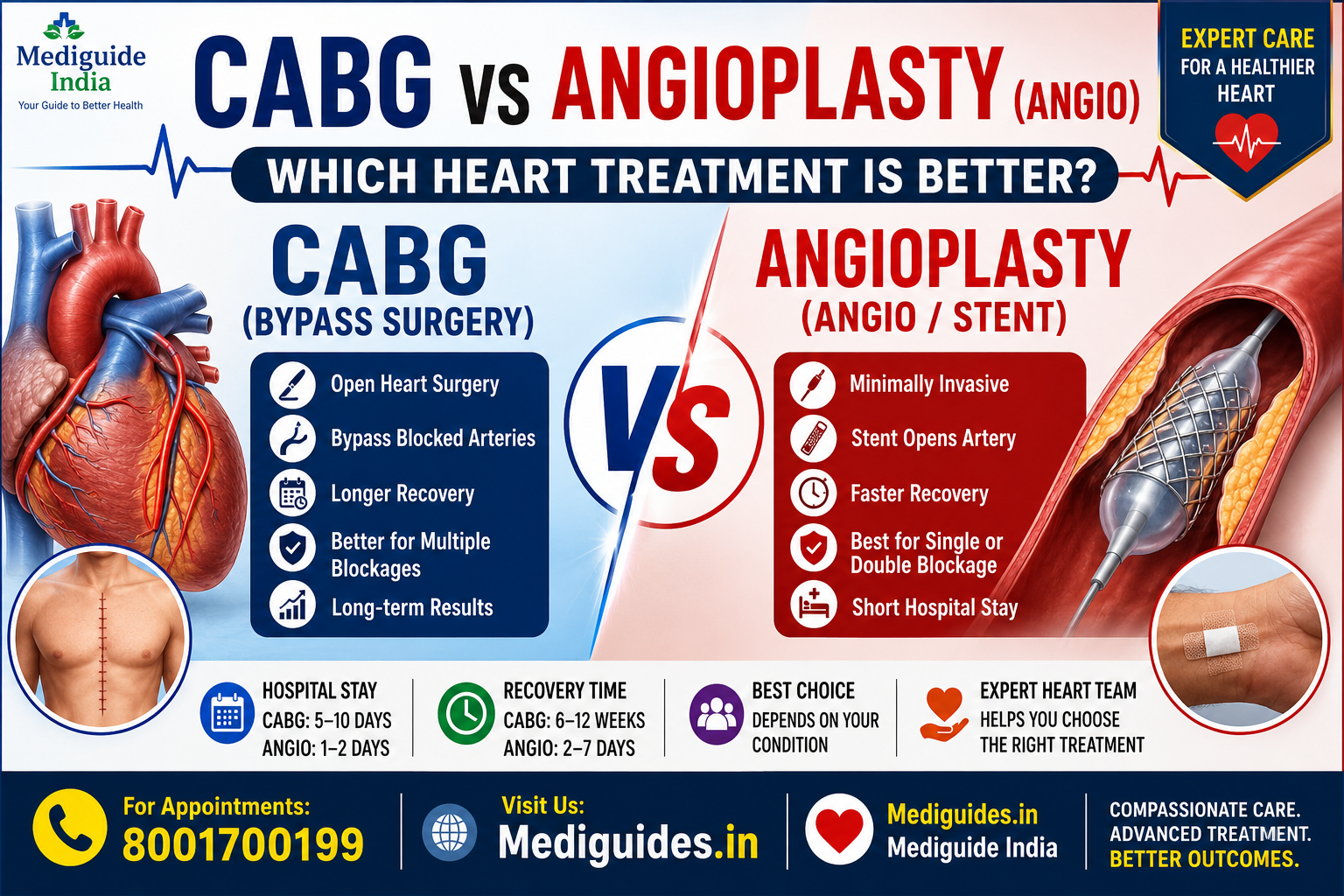
| Feature | CABG (Bypass Surgery) | Angioplasty (PCI/Stent) |
|---|---|---|
| Procedure | Open-heart surgery | Minimally invasive catheter procedure |
| Anesthesia | General anesthesia | Local anesthesia with sedation |
| Hospital Stay | 5–10 days | 1–2 days |
| Recovery Time | 6–12 weeks | 2–7 days |
| Chest Opening | Yes | No |
| Stent Used | No | Yes |
| Best For | Multiple blocked arteries, left main disease, diabetes | Single or double artery blockage, emergency heart attack |
| Long-term Results | Excellent for complex disease | Good for selected patients |
| Repeat Procedure | Less common | More likely in some patients |
What is CABG?
Coronary Artery Bypass Grafting (CABG) is a surgical procedure where a cardiac surgeon uses a healthy blood vessel from the chest, arm, or leg to bypass blocked coronary arteries. This creates a new pathway for blood to reach the heart muscle.
CABG is usually recommended for:
Triple vessel disease
Left main coronary artery disease
Severe coronary artery blockages
Diabetic patients with multiple blocked arteries
Patients with reduced heart function
Failed angioplasty or recurrent blockages
Advantages
Better long-term survival in complex coronary disease
Lower risk of repeat procedures
More complete revascularization
Excellent symptom relief
Disadvantages
Major surgery
Longer recovery
Higher initial cost
Requires hospitalization
What is Angioplasty (PCI)?
Coronary Angioplasty, also called Percutaneous Coronary Intervention (PCI), is a minimally invasive procedure. A cardiologist inserts a catheter through the wrist or groin, inflates a balloon to open the blocked artery, and usually places a stent to keep the artery open.
Angioplasty is commonly recommended for:
Single artery blockage
Double vessel disease (selected cases)
Acute heart attack (STEMI)
Patients unsuitable for surgery
Restenosis after previous procedures
Advantages
No chest incision
Short hospital stay
Faster recovery
Less pain
Quick return to daily activities
Disadvantages
Higher chance of needing another procedure in some patients
Requires blood-thinning medication after stent placement
May not be suitable for complex or diffuse disease
CABG vs Angioplasty: Which Is Better?
The answer depends on the patient's condition. Neither treatment is universally better.
CABG is generally preferred for:
Three-vessel coronary artery disease
Left main coronary artery disease
Diabetes with multivessel disease
Diffuse coronary blockages
Complex coronary anatomy
Angioplasty is generally preferred for:
Heart attack requiring urgent treatment
Single-vessel disease
Selected two-vessel disease
Patients at high surgical risk
The decision is often made by a Heart Team, including an interventional cardiologist and a cardiac surgeon, based on angiography findings, overall health, and patient preferences.
Risks
CABG
Bleeding
Infection
Stroke
Heart rhythm disturbances
Kidney complications
Longer recovery
Angioplasty
Bleeding at the catheter site
Restenosis (re-narrowing)
Stent thrombosis
Contrast-related kidney injury
Need for repeat angioplasty
Recovery
After CABG
ICU stay: 1–2 days
Hospital: 5–10 days
Return to office work: 6–8 weeks
Full recovery: 2–3 months
After Angioplasty
Hospital: 1–2 days
Light activities: 24–48 hours
Return to work: Within a week for many patients
Full recovery: Usually within a few days
Lifestyle After Treatment
Whether you undergo CABG or angioplasty, long-term success depends on healthy lifestyle choices:
Stop smoking
Eat a heart-healthy diet
Exercise regularly (as advised by your doctor)
Maintain a healthy weight
Control diabetes, blood pressure, and cholesterol
Take prescribed medications consistently
Attend regular follow-up appointments
Frequently Asked Questions
Can CABG cure heart disease?
No. CABG bypasses blocked arteries but does not cure the underlying atherosclerosis. Lifestyle changes and medication remain essential.
Can a patient need CABG after angioplasty?
Yes. Some patients may require bypass surgery if blockages recur or new complex disease develops.
Is angioplasty safer than CABG?
Angioplasty is less invasive and has a shorter recovery, but CABG often provides better long-term outcomes for patients with complex multivessel disease.
Which treatment lasts longer?
For many patients with extensive coronary artery disease, CABG offers more durable long-term results, though outcomes depend on individual factors.
Conclusion
Both CABG and angioplasty are effective treatments for coronary artery disease. Angioplasty offers a minimally invasive option with quicker recovery, while CABG is often the preferred treatment for patients with complex or multiple coronary artery blockages because of its long-term benefits. The most appropriate treatment should always be decided after evaluation by a qualified cardiologist and cardiac surgeon.







No Comments For Now.