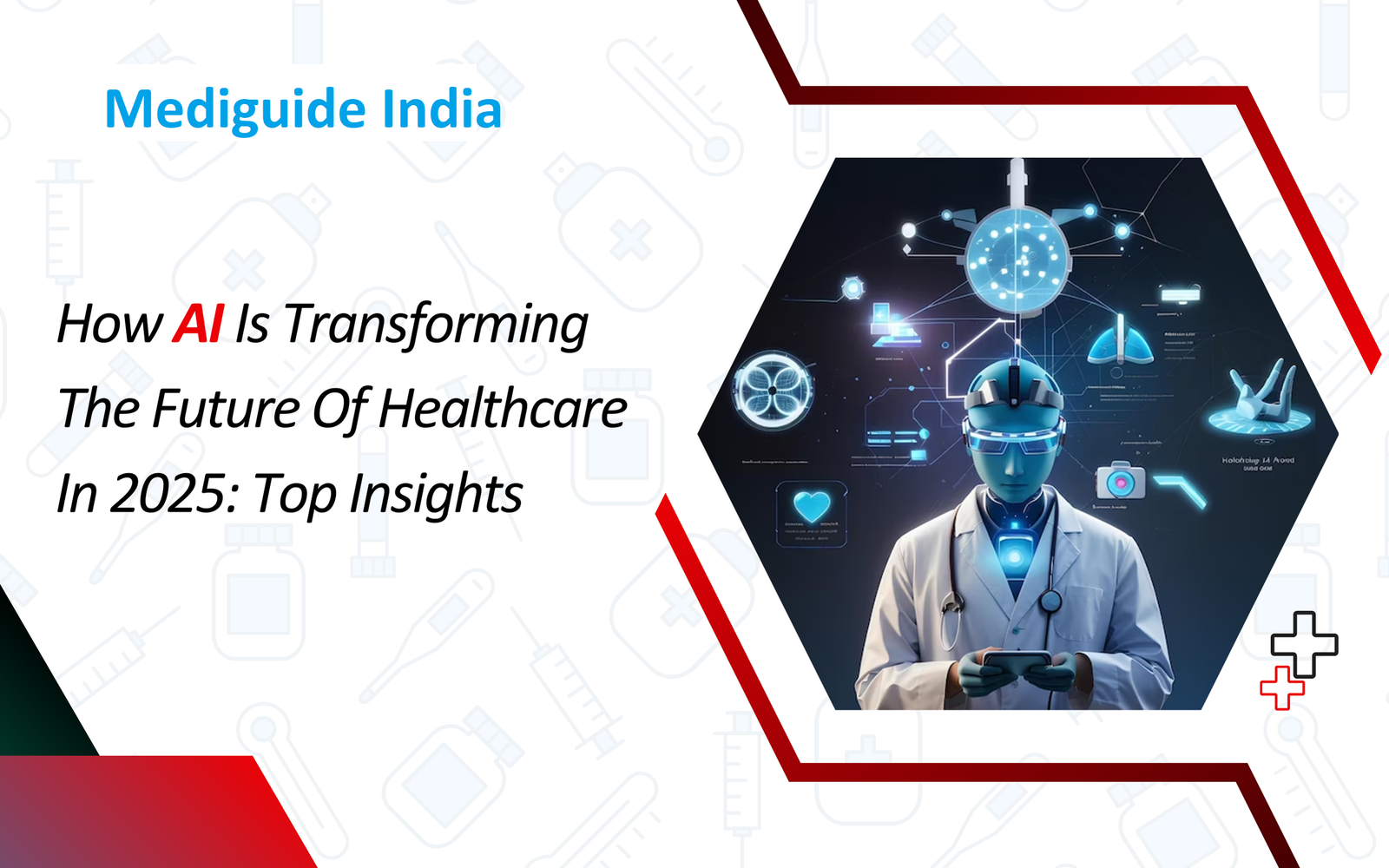
AI In Healthcare : Transforming The Future Of Medicine
- 6th August, 2025
- 0 Comments
- 223
- Healthcare

AI in Healthcare: Transforming the Future of Medicine
In the 21st century, healthcare is undergoing a radical transformation—and at the heart of this revolution is Artificial Intelligence (AI). What once seemed like science fiction is now a rapidly growing reality. From early disease detection and diagnosis to virtual consultations and robotic surgeries, AI is changing the way we perceive and experience healthcare.
At Mediguides.in, we are passionate about making complex medical topics easy to understand. In this blog, we will explore the many ways AI is being used in healthcare, its potential benefits, and the challenges it must overcome.
What is AI in Healthcare?
AI, or Artificial Intelligence, refers to the ability of machines and software to simulate human intelligence. In healthcare, AI involves the use of algorithms and software to analyze complex medical data, assist in diagnosis, suggest treatments, and even perform certain medical procedures.
These technologies are trained using massive datasets—such as lab reports, scans, genetic profiles, and clinical notes—to identify patterns and predict outcomes. AI tools can learn from past cases and continue to improve over time, making them increasingly valuable in medical decision-making.
1. Disease Detection and Early Diagnosis
One of the most powerful uses of AI in healthcare is early disease detection. AI algorithms can analyze imaging data, blood tests, and patient histories to detect diseases like cancer, heart disease, diabetes, and neurological disorders at an early stage—often before symptoms appear.
For instance, AI-based image recognition tools are now being used to detect signs of breast cancer, lung nodules, or retinal damage in diabetic patients. These systems can match, and sometimes even surpass, the accuracy of trained radiologists.
Benefits:
-
Faster diagnosis
-
Reduced human error
-
Early intervention leads to better outcomes
2. Personalized Medicine and Treatment Plans
Not all treatments work the same way for everyone. Personalized medicine aims to customize healthcare based on an individual’s genetic profile, lifestyle, and medical history.
AI plays a critical role by analyzing vast amounts of patient data to recommend personalized treatment options. For example, in cancer care, AI can analyze a tumor’s genetic makeup and suggest specific drugs that are most likely to be effective, reducing trial-and-error treatment cycles.
Examples of AI in Personalized Care:
-
Genomic data analysis for rare diseases
-
AI models suggesting diet and medication adjustments for chronic conditions
-
Tailored physical therapy programs using motion sensors and AI tracking
3. AI-Powered Virtual Health Assistants
Imagine having a doctor available 24/7 on your phone. That’s now possible thanks to AI-powered virtual assistants and chatbots. These tools can:
-
Answer health-related queries
-
Help track symptoms
-
Remind patients to take medication
-
Schedule doctor appointments
Apps like Ada, Babylon Health, and Mfine are already helping millions of users globally. In rural and underserved areas, where medical facilities are limited, AI chatbots can provide first-line advice and triage support.
4. Medical Imaging and Radiology
Radiology departments are one of the biggest beneficiaries of AI in healthcare. With thousands of scans to analyze daily, radiologists are often overwhelmed. AI steps in as a second opinion—helping to analyze X-rays, CT scans, MRIs, and ultrasounds efficiently and accurately.
AI tools in radiology:
-
Detect pneumonia in chest X-rays
-
Identify brain abnormalities in MRIs
-
Spot fractures or bone deterioration in orthopedic scans
Studies show that when radiologists and AI tools collaborate, diagnostic accuracy improves significantly.
5. Robotic Surgery and Smart Operating Rooms
AI has also entered the operating room. Robotic surgery systems, guided by AI and controlled by surgeons, allow for highly precise operations with minimal invasion. These systems can:
-
Reduce human tremors
-
Navigate complex anatomy
-
Make surgeries safer and faster
Smart operating rooms use AI to monitor patient vitals in real time, predict complications, and suggest next steps. This significantly improves patient safety and post-operative outcomes.
6. Accelerated Drug Development
Developing new drugs is a time-consuming and expensive process. AI is speeding it up by:
-
Predicting how different chemical compounds will interact with the human body
-
Analyzing trial data faster
-
Identifying promising drug candidates early
During the COVID-19 pandemic, AI tools were used to analyze millions of molecular combinations to fast-track vaccine development. This not only saved time but also helped in optimizing the effectiveness of the drugs and vaccines released.
7. Remote Monitoring and Smart Wearables
AI is also making remote patient monitoring easier through smart devices like wearables, fitness trackers, and biosensors. These gadgets can track:
-
Heart rate
-
Blood pressure
-
Sleep patterns
-
Blood sugar levels
Data from these devices is analyzed using AI to detect abnormalities, alert healthcare providers, or suggest lifestyle changes. This is especially beneficial for managing chronic conditions like diabetes and hypertension.
8. Predictive Analytics for Hospitals and Public Health
Hospitals use AI-driven predictive analytics to manage:
-
Patient admission rates
-
Resource allocation (e.g., ICU beds, ventilators)
-
Staff scheduling
-
Outbreak prediction and containment
Public health departments can use AI to analyze patterns and predict disease outbreaks—like dengue, flu, or COVID-19—helping in better planning and response.
Challenges of Using AI in Healthcare
Despite its many advantages, AI in healthcare faces several challenges:
-
Data Privacy: Patient information must be securely handled.
-
Bias in Algorithms: AI is only as good as the data it learns from. If the data is biased or incomplete, the results can be misleading.
-
Human Oversight: AI is a tool—not a replacement. Final decisions must always involve qualified medical professionals.
-
Cost and Accessibility: Many advanced AI systems are expensive and not yet accessible in all regions, especially rural or underdeveloped areas.
The Future of AI in Healthcare
The potential for AI in healthcare is enormous. With continuous advancements in computing power, data storage, and machine learning, AI is expected to:
-
Make healthcare more affordable
-
Improve access in remote areas
-
Support preventive healthcare models
-
Reduce medical errors and misdiagnosis
India, with its vast population and growing digital infrastructure, stands to benefit significantly from AI-led health innovations. Startups, government initiatives, and research institutions are actively working to bring AI into hospitals, clinics, and even households.
Conclusion: Smarter Care Begins Today
AI in healthcare is not about replacing doctors or nurses. It’s about giving them smarter tools so they can focus more on what matters—caring for patients. From diagnosis to post-treatment care, AI is making medicine more efficient, accurate, and personalized.
At Mediguides.in , we are committed to educating our readers on the innovations shaping tomorrow’s healthcare. Whether you're a patient, caregiver, or healthcare professional, understanding AI's role today will help you make better decisions tomorrow.
The future of healthcare is not just coming—it’s already here, and it’s powered by AI.
8001700199, https://www.mediguides.in/






No Comments For Now.