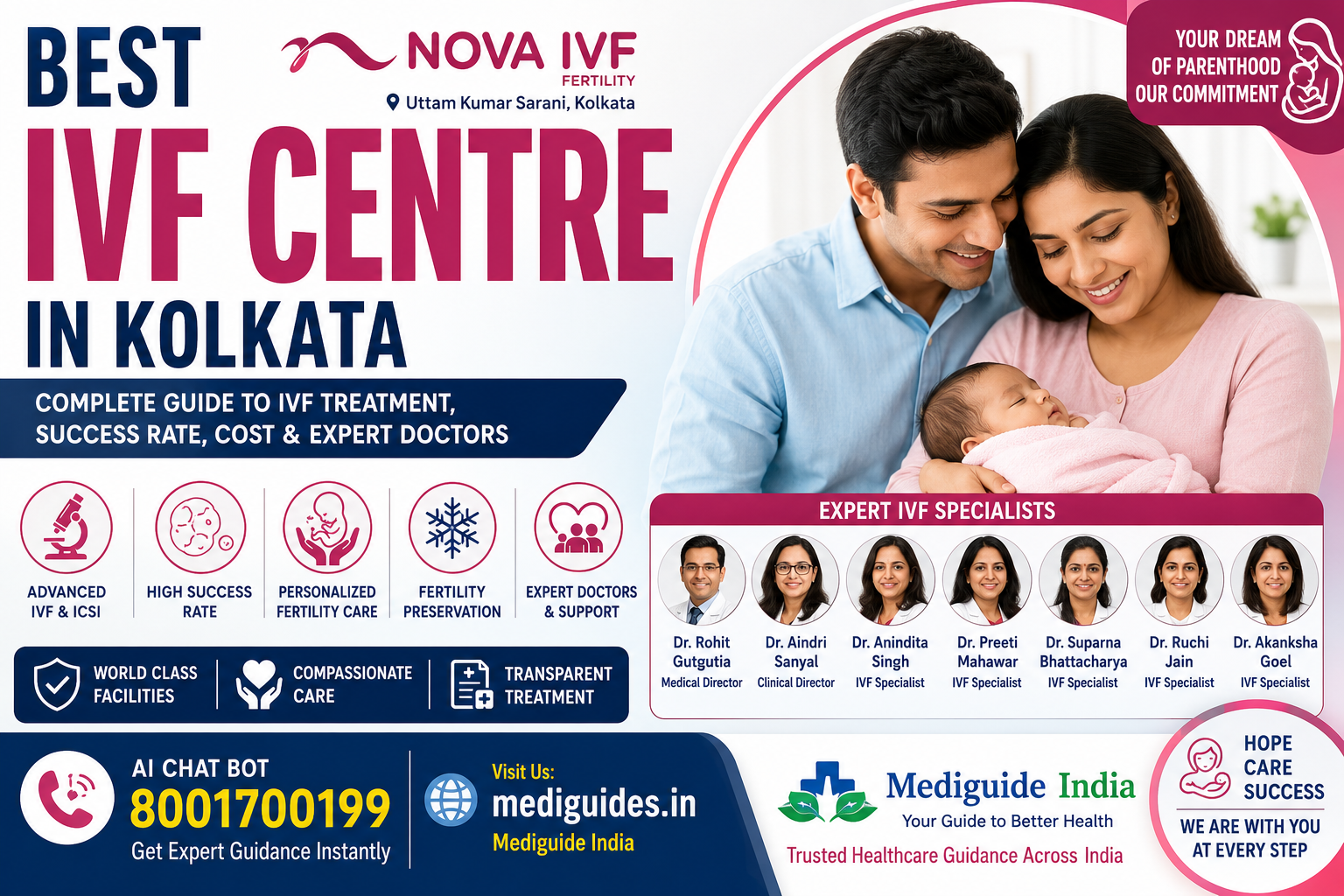
Best IVF Centre In Kolkata: Complete Guide To IVF Treatment, Success Rate, Cost, Expert Doctors & Fertility Care | Mediguide India.
- 18th July, 2026
- 0 Comments
- 46
- Healthcare

Introduction
Parenthood is a cherished dream for many couples. However, infertility has become an increasingly common health concern worldwide. According to the World Health Organization (WHO), infertility affects millions of couples globally. Fortunately, advances in reproductive medicine have made it possible for many couples to conceive through Assisted Reproductive Technologies (ART), including In Vitro Fertilization (IVF).
Kolkata has emerged as one of Eastern India's leading destinations for fertility treatment, offering world-class IVF centres, experienced fertility specialists, modern laboratories, and advanced reproductive technologies.
Among the trusted names in fertility care is Nova IVF Fertility, a leading chain of fertility centres in India. The Nova IVF Fertility Centre at Uttam Kumar Sarani, Kolkata, provides comprehensive fertility evaluation and treatment, supported by experienced IVF specialists, embryologists, and advanced laboratory facilities. The centre offers a wide range of fertility services, including IVF, ICSI, IUI, fertility preservation, donor programmes, and advanced reproductive procedures.
In this comprehensive guide by Mediguide India, you'll learn about infertility, IVF treatment, advanced fertility technologies, treatment costs, success rates, and the expert team at Nova IVF Fertility, Kolkata.
Understanding Infertility
Infertility is defined as the inability to achieve pregnancy after 12 months of regular, unprotected intercourse. For women aged 35 years or older, evaluation is generally recommended after six months of unsuccessful attempts.
Infertility can affect both men and women and may result from one or multiple underlying factors. In many cases, both partners require evaluation to identify the cause and determine the most appropriate treatment.
Common Causes of Female Infertility
Female infertility can result from several conditions affecting ovulation, the fallopian tubes, uterus, or hormonal balance.
Ovulation Disorders
Irregular or absent ovulation is one of the most common causes of female infertility.
Conditions include:
Polycystic Ovary Syndrome (PCOS)
Premature ovarian insufficiency
Thyroid disorders
Hyperprolactinemia
Blocked Fallopian Tubes
Damage or blockage of the fallopian tubes may prevent the egg and sperm from meeting.
Possible causes include:
Pelvic infections
Previous surgery
Endometriosis
Tubal tuberculosis
Endometriosis
Endometriosis occurs when tissue similar to the uterine lining grows outside the uterus. It can affect the ovaries, fallopian tubes, and pelvic organs, reducing fertility.
Symptoms may include:
Painful periods
Pelvic pain
Pain during intercourse
Difficulty conceiving
Uterine Problems
Structural abnormalities may interfere with implantation or pregnancy.
Examples include:
Fibroids
Uterine polyps
Congenital uterine anomalies
Intrauterine adhesions
Age-Related Fertility Decline
Female fertility gradually declines after the age of 30 and more rapidly after 35 due to reduced egg quantity and quality.
Common Causes of Male Infertility
Male infertility contributes to approximately half of infertility cases.
Common causes include:
Low sperm count
Poor sperm motility
Abnormal sperm morphology
Varicocele
Hormonal disorders
Genetic conditions
Infections
Lifestyle factors such as smoking, alcohol, obesity, and stress
A semen analysis is one of the first investigations recommended during infertility evaluation.
Lifestyle Factors Affecting Fertility
Certain lifestyle habits can negatively impact fertility in both men and women.
These include:
Smoking
Excessive alcohol consumption
Obesity
Poor nutrition
Sedentary lifestyle
Chronic stress
Lack of sleep
Environmental toxins
Adopting a healthy lifestyle may improve reproductive health and complement fertility treatment.
When Should You Consult a Fertility Specialist?
It is advisable to seek specialist evaluation if:
Pregnancy has not occurred after one year of trying (or six months if the woman is over 35)
Menstrual cycles are irregular or absent
There is a history of recurrent miscarriage
Male factor infertility is suspected
There is known endometriosis or PCOS
Previous pelvic surgery or infections have affected fertility
There are concerns about sperm quality or erectile function
Early evaluation can help identify underlying issues and guide appropriate treatment.
What is IVF?
In Vitro Fertilization (IVF) is an Assisted Reproductive Technology (ART) in which eggs are retrieved from the ovaries and fertilized with sperm in a specialized laboratory. The resulting embryo is then transferred into the uterus with the aim of achieving pregnancy.
IVF may be recommended when other fertility treatments are unsuccessful or when specific medical conditions make natural conception difficult.
Who May Benefit from IVF?
IVF may be considered for:
Blocked or damaged fallopian tubes
Severe male factor infertility
Endometriosis
Ovulation disorders that have not responded to treatment
Unexplained infertility
Recurrent IVF or IUI failure
Fertility preservation
Certain genetic conditions requiring advanced reproductive techniques
The decision to proceed with IVF depends on a detailed evaluation by a fertility specialist.
Step-by-Step IVF Procedure
Step 1: Initial Consultation
The fertility specialist reviews the couple's medical history, previous treatments, menstrual history, and lifestyle factors. Blood tests, ultrasound scans, and semen analysis are commonly performed.
Step 2: Ovarian Stimulation
Hormonal medications are used to stimulate the ovaries to produce multiple mature eggs.
The patient is monitored through ultrasound examinations and blood tests to assess follicular growth.
Step 3: Egg Retrieval
Once the follicles have matured, eggs are collected through a minor procedure performed under sedation or anesthesia.
The procedure usually takes 20–30 minutes, and most patients return home the same day.
Step 4: Fertilization
The collected eggs are combined with prepared sperm in the embryology laboratory. In some cases, Intracytoplasmic Sperm Injection (ICSI) is used, where a single sperm is injected directly into an egg.
Step 5: Embryo Culture
The fertilized eggs develop into embryos over several days under carefully controlled laboratory conditions.
Embryologists monitor embryo growth and select the most suitable embryo(s) for transfer.
Step 6: Embryo Transfer
One or more embryos are gently transferred into the uterus using a thin catheter. The procedure is generally painless and does not require surgery.
Step 7: Pregnancy Test
Approximately 10–14 days after embryo transfer, a blood test is performed to determine whether pregnancy has been achieved.
Success Rates of IVF
The likelihood of success depends on several factors, including:
Woman's age
Egg quality
Sperm quality
Cause of infertility
Embryo quality
Uterine health
Lifestyle factors
While IVF has helped millions of couples worldwide, success rates vary between individuals, and no clinic can guarantee pregnancy.
Why Choose Nova IVF Fertility Kolkata?
Nova IVF Fertility is recognized for its dedicated fertility services and patient-focused approach. The Uttam Kumar Sarani centre offers comprehensive evaluation and treatment using standardized clinical protocols and advanced laboratory support.
Highlights include:
Experienced fertility specialists
Modern embryology laboratory
IVF, ICSI, and IUI services
Fertility preservation options
Personalized treatment plans
Counselling and patient support
Quality control and evidence-based practices
Advanced Fertility Treatments Available at Nova IVF Fertility Kolkata
Modern fertility care extends beyond conventional IVF. Depending on the cause of infertility, fertility specialists may recommend advanced Assisted Reproductive Technology (ART) procedures to improve the chances of conception.
Intracytoplasmic Sperm Injection (ICSI)
ICSI is an advanced laboratory procedure in which a single healthy sperm is injected directly into a mature egg. It is particularly useful for couples with severe male-factor infertility.
ICSI may be recommended for:
Very low sperm count
Poor sperm motility
Abnormal sperm morphology
Previous IVF fertilization failure
Surgically retrieved sperm
Frozen sperm samples
Intrauterine Insemination (IUI)
IUI is a simpler fertility treatment where specially prepared sperm is placed directly into the uterus during ovulation.
Suitable for:
Mild male infertility
Unexplained infertility
Cervical factor infertility
Ovulation disorders
Donor sperm treatment
IUI is less invasive than IVF but may not be appropriate for every couple.
Blastocyst Culture & Transfer
Instead of transferring embryos on Day 2 or Day 3, embryos may be cultured until the blastocyst stage (Day 5 or Day 6). This allows embryologists to select embryos with better developmental potential in appropriate cases.
Benefits
Better embryo selection
Improved implantation potential in selected patients
Reduced need for multiple embryo transfer
Frozen Embryo Transfer (FET)
Embryos can be frozen using advanced cryopreservation techniques and transferred in a later menstrual cycle.
Advantages include:
Flexibility in treatment planning
Reduced ovarian stimulation for subsequent cycles
Opportunity to preserve embryos for future family planning
Fertility Preservation
Fertility preservation may be considered by individuals who wish to preserve their reproductive potential before medical treatment or for personal reasons.
Services may include:
Egg freezing (Oocyte Cryopreservation)
Sperm freezing
Embryo freezing
Why Choose Nova IVF Fertility Kolkata?
Nova IVF Fertility has established itself as one of India's dedicated fertility care providers with standardized treatment protocols, experienced specialists, and advanced embryology laboratories.
Key Features
Experienced IVF Specialists
Advanced Embryology Laboratory
Modern IVF Technology
Personalized Fertility Treatment
Ethical Clinical Practices
Patient Counselling
International Quality Standards
Male & Female Fertility Evaluation
Fertility Preservation Services
Expert IVF Specialists at Nova IVF Fertility Kolkata
Dr. Rohit Gutgutia
Medical Director & Senior Fertility Specialist
Qualifications
MBBS
MD (Obstetrics & Gynaecology)
Fellowship in Reproductive Medicine
Expertise
IVF
ICSI
High-risk infertility
Recurrent IVF failure
Fertility preservation
Advanced reproductive medicine
Dr. Rohit Gutgutia is one of the senior fertility specialists associated with Nova IVF Fertility and has extensive experience in assisted reproductive technologies.
Dr. Aindri Sanyal
Clinical Director & Fertility Specialist
Areas of Expertise
IVF
ICSI
PCOS Management
Endometriosis
Recurrent Pregnancy Loss
Female Infertility
She provides individualized fertility treatment plans based on the patient's medical history and reproductive needs.
Dr. Anindita Singh
Expertise
Infertility Evaluation
IVF
Ovulation Disorders
Fertility Counselling
Assisted Reproductive Technology
Dr. Preeti Mahawar
Areas of Interest
IVF
IUI
Fertility Preservation
Reproductive Endocrinology
Women's Reproductive Health
Dr. Suparna Bhattacharya
Clinical Expertise
Female Infertility
Assisted Reproductive Technology
Fertility Assessment
Reproductive Medicine
Dr. Ruchi Jain
Expertise
IVF
ICSI
Fertility Counselling
High-Risk Infertility Cases
Reproductive Medicine
Dr. Akanksha Goel
Special Interests
Fertility Evaluation
IVF
Women's Health
Infertility Management
Reproductive Medicine
Note: Doctor availability and consultation schedules may change. Patients are advised to confirm appointments directly with the clinic before visiting.
IVF Cost in Kolkata
The cost of IVF treatment varies depending on the patient's medical condition, investigations, medications, and the type of fertility procedure performed.
Factors Affecting IVF Cost
Number of IVF cycles required
Fertility medications
ICSI (if required)
Blastocyst culture
Frozen embryo transfer
Donor egg or donor sperm programmes
Genetic testing (PGT), if advised
Fertility preservation
Patients should discuss the expected treatment plan and cost estimate with the fertility centre before starting treatment.
Success Rate of IVF
IVF success depends on several important factors:
Age of the woman
Ovarian reserve
Egg quality
Sperm quality
Embryo quality
Uterine health
Lifestyle factors
Underlying cause of infertility
No fertility centre can guarantee pregnancy. Success rates vary from one patient to another, and treatment decisions should be individualized after a thorough clinical evaluation.
Tips to Improve Fertility
Whether trying to conceive naturally or through assisted reproductive technology, maintaining a healthy lifestyle can support reproductive health.
Eat a balanced diet rich in fruits, vegetables, whole grains, and lean proteins.
Maintain a healthy body weight.
Avoid smoking, tobacco, and excessive alcohol consumption.
Exercise regularly, but avoid excessive physical strain.
Manage stress through relaxation techniques and adequate sleep.
Control chronic conditions such as diabetes and thyroid disorders.
Follow your doctor's advice regarding supplements and medications.
Frequently Asked Questions (FAQs)
1. What is the best age for IVF?
Women below the age of 35 generally have higher success rates, but IVF may be considered at older ages based on individual evaluation.
2. Is IVF painful?
Most IVF procedures involve only mild discomfort. Egg retrieval is usually performed under sedation or anesthesia.
3. How long does one IVF cycle take?
A complete IVF cycle generally takes about 4–6 weeks, although the timeline may vary.
4. Is IVF always successful?
No. Success depends on several medical and biological factors, including age, embryo quality, and the cause of infertility.
5. How many embryos are transferred?
The number of embryos transferred is decided by the fertility specialist based on clinical guidelines and individual patient factors.
6. Can working women undergo IVF?
Yes. Many women continue working during IVF treatment, although adjustments may be needed during certain stages of the cycle.
7. Can men also be treated for infertility?
Yes. Male infertility evaluation and treatment are important components of fertility care, and both partners are typically assessed.
8. How soon can pregnancy be confirmed after embryo transfer?
A blood test is generally performed around 10–14 days after embryo transfer to check for pregnancy.
Why Choose Mediguide India?
Finding the right fertility specialist can be overwhelming. Mediguide India helps patients make informed healthcare decisions by connecting them with experienced doctors, reputed hospitals, and trusted fertility centres.
Mediguide India Can Help You With:
Finding experienced IVF specialists
Hospital and fertility centre guidance
Appointment assistance
Second medical opinions
Treatment information
Healthcare guidance across India
Contact Mediguide India
🌐 Website
🤖 AI Health Chat Bot
8001700199
Get guidance for:
IVF & Fertility Treatment
Women's Health
Pregnancy Care
Fertility Specialists
Hospitals & Clinics
Appointment Assistance
Conclusion
Infertility is a medical condition that affects both men and women, but advances in reproductive medicine have created new opportunities for many couples to achieve pregnancy. Treatments such as IVF, ICSI, IUI, blastocyst transfer, and fertility preservation have significantly expanded the options available to patients.
Nova IVF Fertility Kolkata offers comprehensive fertility evaluation and assisted reproductive treatments through a multidisciplinary team of experienced specialists and embryologists. The choice of treatment depends on each couple's medical history, fertility evaluation, and individual goals.
If you are planning fertility treatment, consult a qualified fertility specialist to discuss the most appropriate approach for your specific situation.







No Comments For Now.